AWS for DevOps: Where to Start
AWS provides hundreds of services for different types of applications and businesses. As a DevOps engineer, you don't need to learn all of them.
The goal is to understand the AWS services that are commonly used to deploy, manage, scale, and monitor applications.
How Should You Start Learning Cloud?
Before learning AWS services, it's important to understand what Cloud is and why companies use it.
A good starting point is:
What is Cloud?
Why do we need Cloud?
How does Cloud work?
What are IaaS, PaaS, and SaaS?
What are Regions and Availability Zones?
Which AWS services are useful for DevOps?
Understanding these basics makes the AWS services much easier to learn.
DevOps and Cloud
Development teams build applications, but those applications need infrastructure to run.
Traditionally, companies managed their own physical servers. This is known as on-premises infrastructure.
With Cloud Computing, companies can use infrastructure provided by Cloud providers instead of buying and managing all the physical hardware themselves.
For a DevOps engineer, this is important because part of the job is deploying applications and managing the infrastructure they run on.
What Is Cloud Computing?
Cloud Computing means using resources such as servers, storage, and databases through the internet instead of owning and managing all the physical hardware yourself.
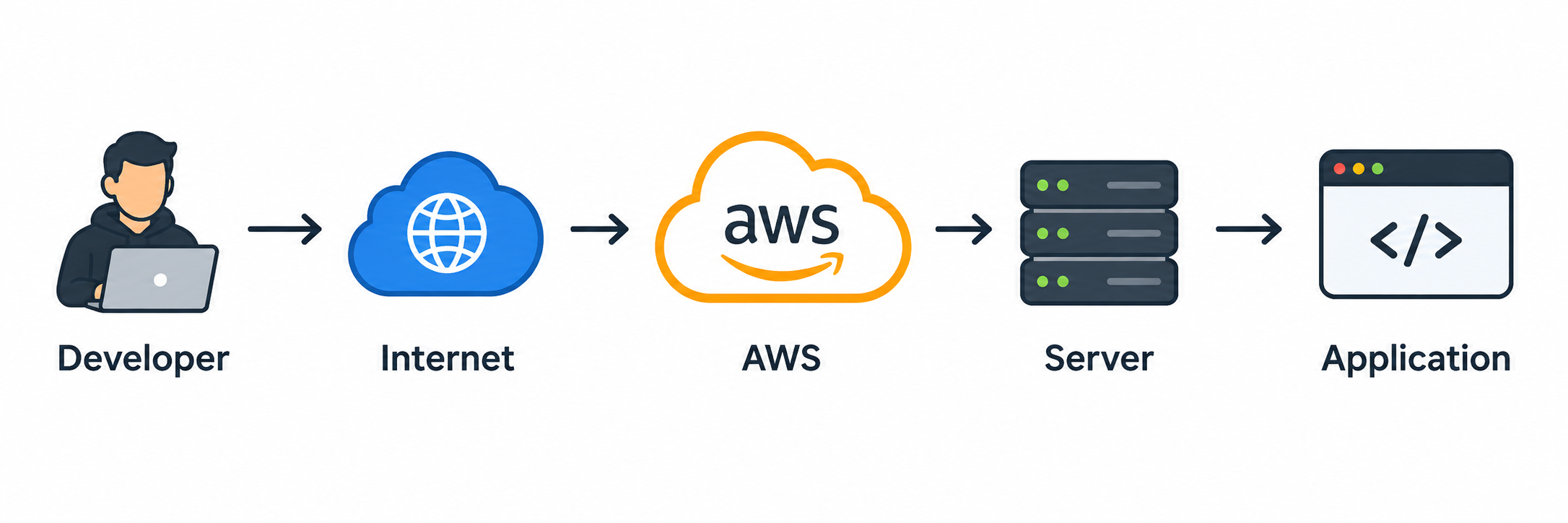
For example, instead of purchasing a physical server, you can create an EC2 instance on AWS and use it to run your application.
Public and Private Cloud
There are different ways organizations can use Cloud infrastructure.
Public Cloud is provided by companies such as AWS, Azure, and Google Cloud. Multiple customers use resources provided by the Cloud provider.
Private Cloud is dedicated to one organization and gives that organization more control over its infrastructure.
Many organizations can also use a combination of on-premises infrastructure and Cloud. This is commonly called a hybrid approach.
IaaS, PaaS and SaaS
You will often hear these three terms when learning Cloud.
IaaS — Infrastructure as a Service
You get infrastructure such as virtual servers and storage and manage more of the environment yourself.
PaaS — Platform as a Service
The Cloud provider manages more of the infrastructure, allowing developers to focus more on their applications.
SaaS — Software as a Service
You simply use a complete software application without managing the infrastructure behind it.
How Does AWS Work?
AWS operates large data centers around the world. These data centers contain the physical servers and infrastructure used to provide AWS services.
Instead of purchasing physical hardware, we can create the resources we need through AWS.
For example:
AWS
 └── EC2 Instance
       └── Application
We pay for the resources according to the applicable AWS pricing model.
AWS Regions and Availability Zones
AWS has infrastructure in different geographical locations called Regions.
Each Region contains multiple Availability Zones.
A simple way to remember this is:
Region
 ├── Availability Zone
 ├── Availability Zone
 └── Availability Zone
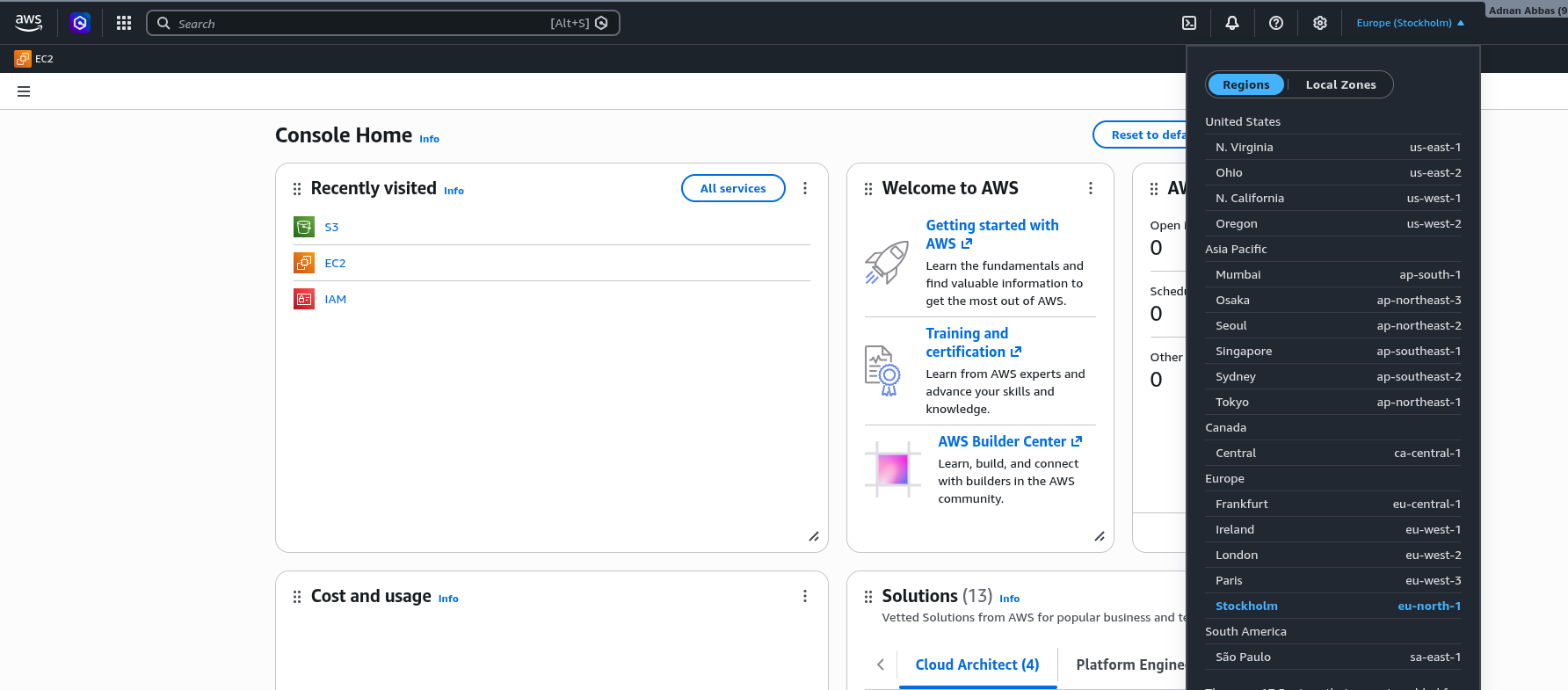
When creating an AWS resource, you normally need to select a Region.
Why Does Region Matter?
The Region you select determines where your resource is created. Service availability and pricing can also vary between Regions.
For example, if you create an EC2 instance in one Region and then switch to another Region, you may not see that instance because you're looking at a different Region.
Always check the selected Region when working in the AWS Console.
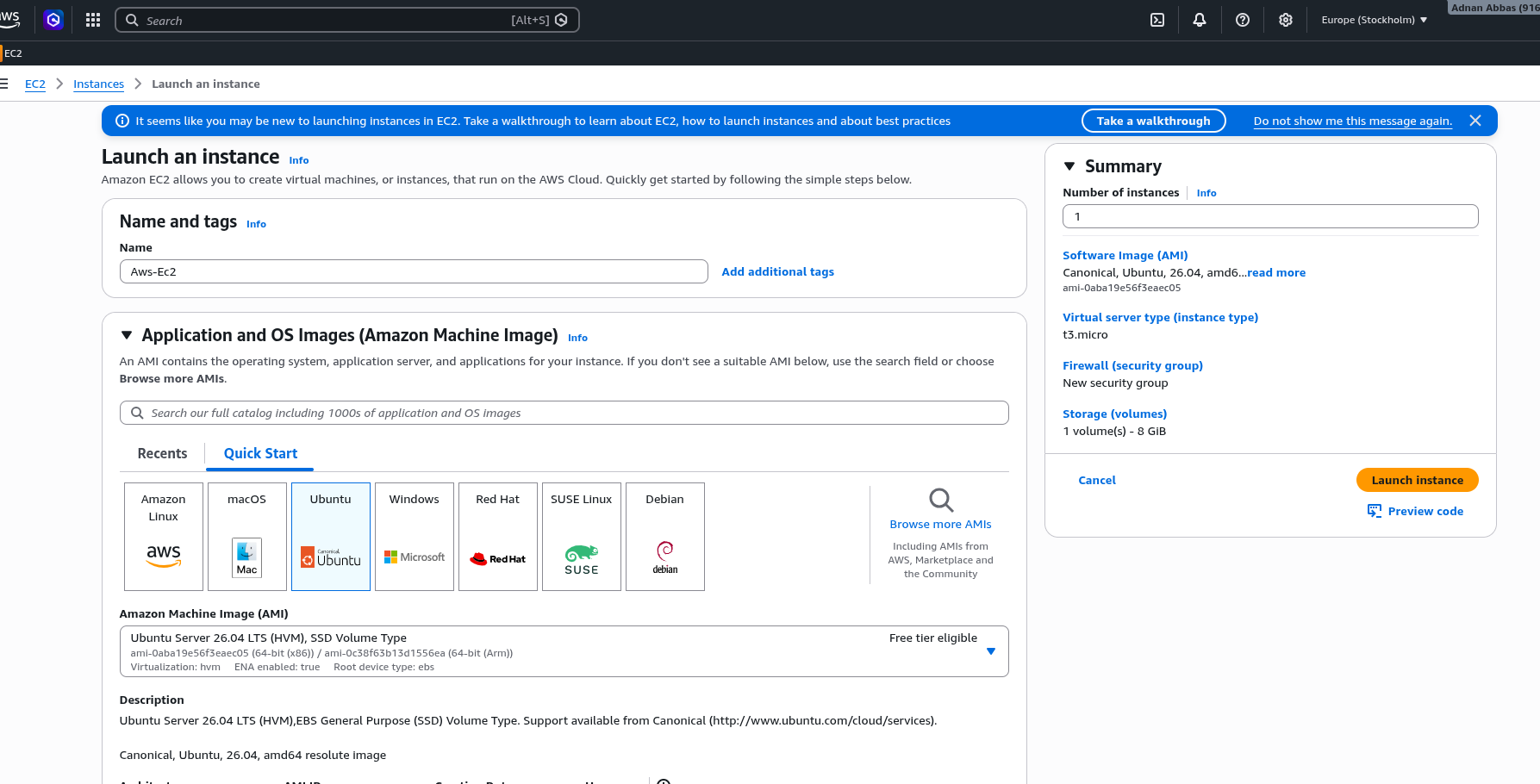
Why AWS?
AWS is one of the major Cloud platforms and is widely used to run applications and infrastructure.
For a DevOps engineer, AWS provides services for areas such as:
Compute
Networking
Storage
Security
Load balancing
Scaling
Monitoring
Containers
Automation
The important thing is not to memorize every AWS service. Instead, focus on the services that are relevant to your work.
AWS Pricing
One of the main benefits of Cloud is that you can create resources when you need them instead of purchasing physical hardware upfront.
AWS follows different pricing models depending on the service. One commonly used model is pay-as-you-go, where you pay based on your usage.
However, Cloud resources can still generate charges, so it's important to understand the pricing before creating resources.
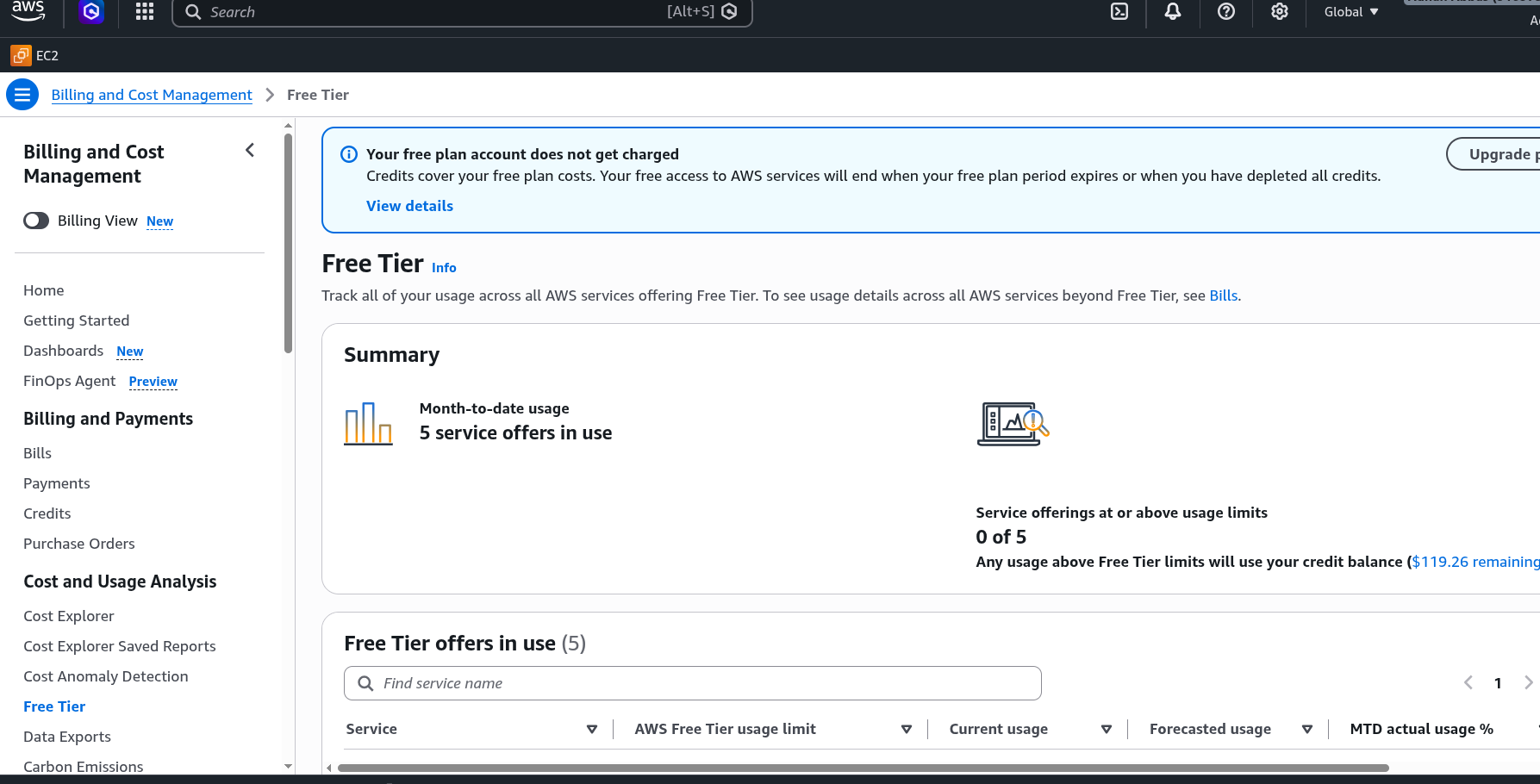
AWS Free Tier
AWS offers free usage for certain services and limits, but the available offers and conditions can change.
Before starting a practice project, always check the current Free Tier information.
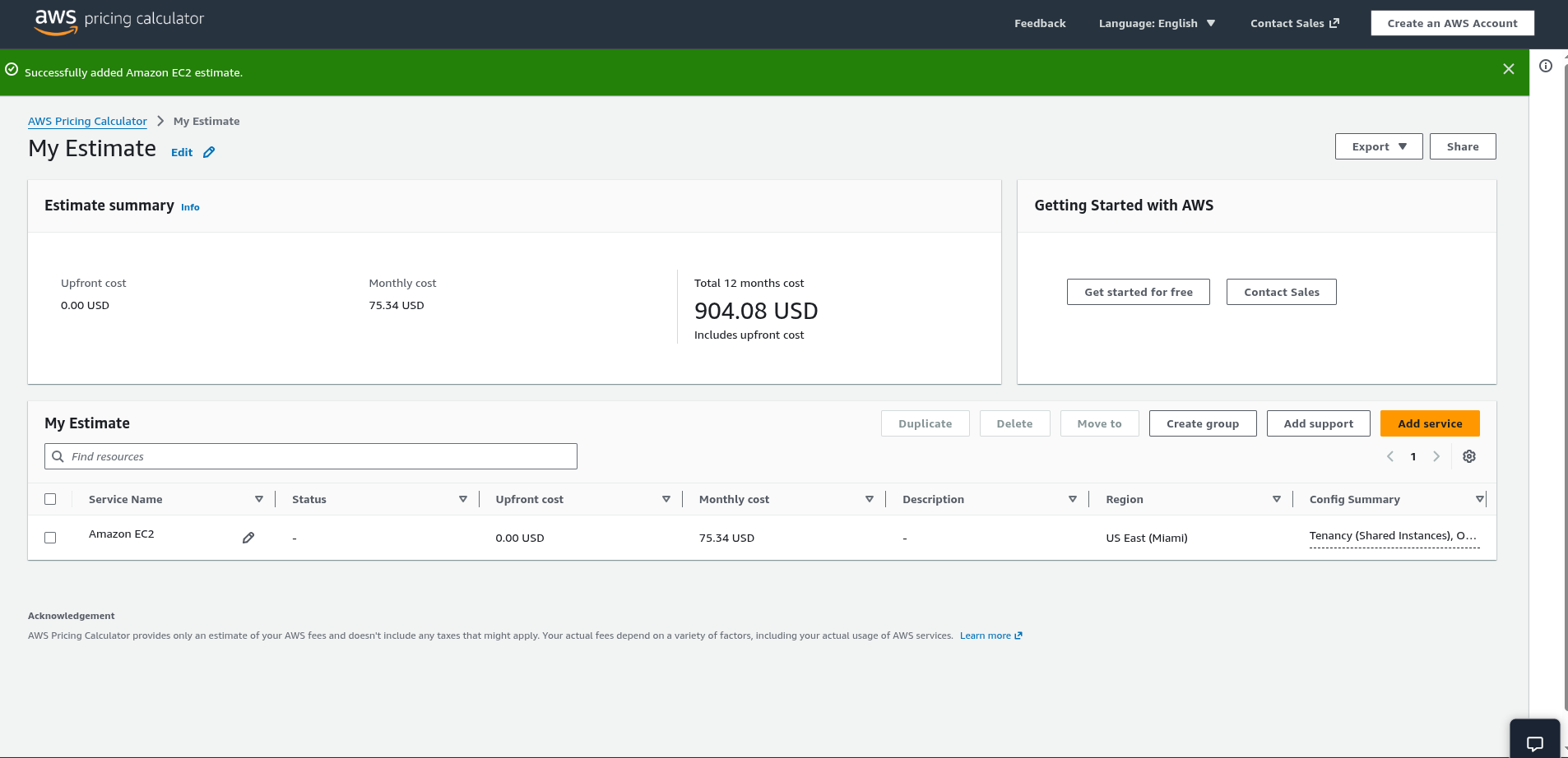
AWS Pricing Calculator
AWS provides a Pricing Calculator that can be used to estimate the cost of AWS resources.
For example, you can select a Region, choose an EC2 configuration, specify the expected usage, and get an estimated cost.
What Should a DevOps Engineer Learn in AWS?
You don't need to learn AWS from A to Z.
A practical starting path is:
Compute
Start with EC2 and understand how applications run on servers.
Networking
Learn the basics of VPC, subnets, security groups, and load balancers.
Storage
Understand services such as S3 and EBS.
Security
Learn IAM users, roles, and permissions.
Scaling and Monitoring
Understand Auto Scaling and CloudWatch.
Containers
After learning Docker and Kubernetes, move towards services such as ECR and EKS.
Final Thoughts
AWS is a large platform, but learning everything at once isn't necessary.
As a DevOps engineer, focus on understanding how applications are deployed, managed, scaled, secured, and monitored.
Start with the Cloud fundamentals, then learn the AWS services that support these areas.
The goal is not to memorize AWS services. The goal is to understand how they are used together to run real applications.